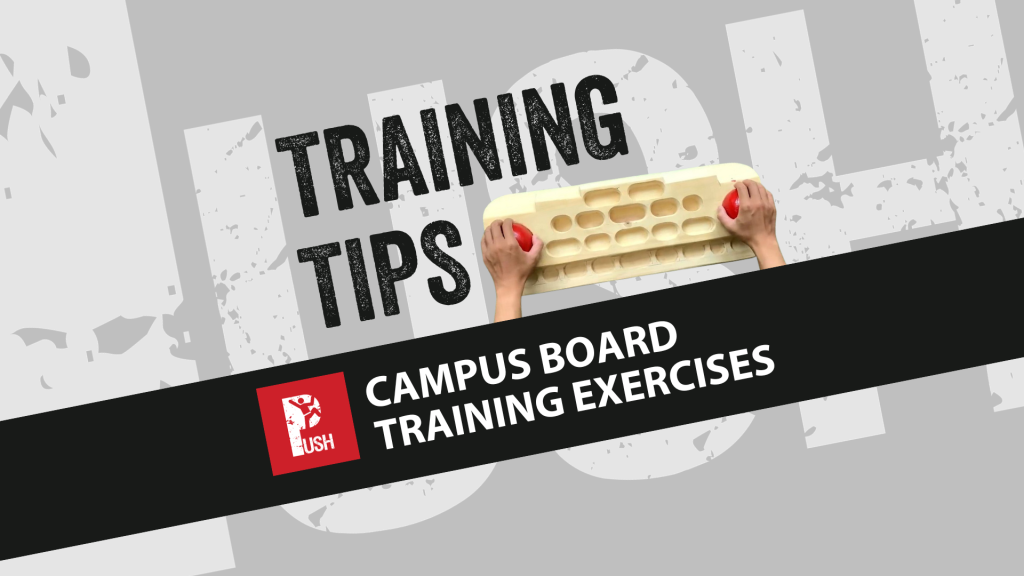
CAPUS BOARD
TRAINING TIPS
Climbing without feet is one of the most exciting movements to watch. The term “campus” originated in a German university gym called The Campus Centre. The facility housed the world’s first campus board, which was built by German crusher Wolfgang Güllich in 1988.
What is a Campus boarD?
A campus board is a training tool that has been widely adopted to improve rock climbing performance. A campus board is a slightly overhanging, suspended wooden board with a variety of different-sized “rungs” (i.e. edges) in evenly-spaced vertical increments. The term “campus” implies pulling up on holds without the use of your feet. Technically, you can practice this technique on any campus-friendly route in the gym, but the campus board is specially designed for training. As you can imagine, performing controlled pull-ups on small edges massively increases your finger strength––not to mention your core muscles and deadpoint accuracy.
Khi nào thì bạn nên bắt đầu luyện tập trên Campus Board?
Có nhiều lời khuyên khác nhau, nhưng nhiều người leo núi đề xuất rằng bạn nên đã leo núi ít nhất 18 tháng trước khi bắt đầu luyện tập trên campus board. Thực hiện các bài tập này dựa trên khả năng của cơ thể bạn và ngừng ngay lập tức nếu bạn gặp bất kỳ cơn đau hoặc kích ứng nào. Hãy thử bắt đầu với giai đoạn tập luyện hai buổi mỗi tuần trong vòng bốn tuần để đạt hiệu quả.
Luyện tập với bảng Campus như thế nào?
Campus board là một công cụ tuyệt vời để cải thiện khả năng leo núi của bạn. Ý tưởng là lặp lại các chuyển động cơ bản trên campus board để tăng cường sức mạnh của thân trên. Hãy lưu ý những quy tắc sau đây:
1 – When campusing, you’ve always got to keep your shoulders locked down. Your shoulders should be down and away from this position while your arms are up. If you are ever campusing and feel your shoulder brush your ear — DROP OFF!
2 – Be aware of how much you’re swinging. Someone who has their shoulders correctly activated will be able to generate an opposing force from their core and won’t dangle or swing at all. Obviously, we are aiming to push ourselves in these exercises so it’s okay to swing an amount, but if you are grabbing a rung, bouncing off the board, and having to wait a couple of seconds before you can look at going to the next rung, you shouldn’t be on the board.
3 – Keep your hands halfway between fully crimped and completely open.
Using your momentum and maintaining a consistent upper-body engagement throughout your campus routine is hard. But proper form and technique will help prevent injury and lead to the most beneficial gains. Just remember: when you’re learning a new, difficult exercise for the first time, do your absolute best to start small, use the correct form, and stay in physical control. Your future un-injured self will thank you for it.
Các bài tập trên Campus Board:
Trông có vẻ đơn giản, nhưng không hề dễ dàng để có thể tận dụng tối đa được hết campus board. Có rất nhiều bài tập mà bạn có thể thực hiện trên campus board để có thể tập bổ trợ cho leo núi. Paul sẽ cho bạn 3 bài tập giúp nâng cao khả năng của bản thân!
1 – Find movements you can do with moderate difficulty. Each time you land on new rung counts as a repetition here.
2 – Start yourself a timer and repeat one of your movements for 30 seconds. Aim for 5-10 reps
3 – Tạm ngưng và nghỉ 30 giây.
4 – Repeat steps 2-3 on the minute for 4 minutes.
5 – Rest for 4 minutes before moving on to your next movement and repeating steps 2-4.
If you’re unsure about your form at all, get a friend to watch you, record yourself and compare to the videos.
Climb On!


 Tiếng Việt
  English