"Lúc đó tôi đang thực hiện động tác heel hook - móc gót để gót chân kẹp lên bề mặt volume, một động tác mà tôi có thể làm ngay cả khi ngủ. Tôi kẹp gót chân và rồi gối của tôi phát ra một tiếng "pop".
Đó là năm 2018, khi đầu gối bị thương, hy vọng tham gia cuộc thi leo núi Push Rocktoberfest của Ben Grey cũng tan biến. Dù việc đó làm anh ấy rất thất vọng, nhưng trên hết, mối quan tâm đầu tiên của anh ấy là tình trạng chấn thương và những gì sẽ xảy ra tiếp theo.
Vấn đề về gối của Ben Grey là một chấn thương rất phổ biến trong giới leo núi. Forum chat forums are alive đang có nhiều cuộc thảo luận về hiện tượng gối phát ra tiếng "pop", và không lâu sau đó, từ "ACL" và "meniscus" đáng sợ cũng được đề cập. ACL, hay mạch nội chéo trước, là một mô liên kết nối xương đùi và xương chày trong khuỷu gối. Trong khi đó, "bạn thân" của nó là đôi meniscus nội bên, hoạt động như các chiếc vòng đệm bên trong khớp gối.

Nếu bạn đã biết đến các thuật ngữ ACL hoặc meniscus nội bên, có lẽ bạn đã nghe đến chúng trong ngữ cảnh chấn thương gối. Trên thực tế, từ "tear" (rách) hoặc "injury" (chấn thương) thường theo sau các từ "meniscus" hoặc "ACL" tương tự như cụm từ "người điều khiển không lưu của Pháp" thường đi cùng từ "đình công".
ACL và Meniscus là những bộ phận mà bạn không bao giờ nghĩ đến cho đến khi bạn phải kiểm tra chúng vì những lý do không mong muốn, và việc gây tổn thương cho chúng đặc biệt liên quan đến môn thể thao, đặc biệt là các môn thể thao có sự thay đổi nhanh chóng hướng di chuyển hoặc áp lực dồn về phía hai bên cơ thể. Những cầu thủ bóng đá hiểu rất rõ về điều này.
Thực tế là, có vẻ như bất kỳ vận động viên leo núi nào cũng có thể gặp phải vấn đề này. Tuy nhiên, trừ khi có những trường hợp như kẹp gót chân và té ngã (bao gồm cả việc té ngã rơi vào thảm leo bouldering), leo núi là một môn thể thao không tác động quá nhiều lực lên khuỷu gối.
"Leo núi thực sự tốt cho đầu gối". Fernando Romero, người làm việc tại Trung tâm huấn luyện leo núi và là nhà khoa học thể thao chuyên nghiệp, nhận định như vậy. "Khả năng cao là Ben đã có một vấn đề với đầu gối sẵn trước đó. Các môn thể thao như chạy bộ thường gây ra những vấn đề đó, đặc biệt là khi chạy liên tục tác động mạnh lên đầu gối nếu bạn kết hợp với giày hoặc vận động với tư thế không tốt. Tuy nhiên, leo núi không liên quan đến tác động mạnh như vậy. Tác động lớn nhất thường xảy ra khi rơi xuống thảm một cách không đúng tư thế, và ngoài ra, việc duy trì sự thẳng hàng của đầu gối với các cơ lớn để thực hiện công việc."
Trong khi đó, quay trở lại với Ben...

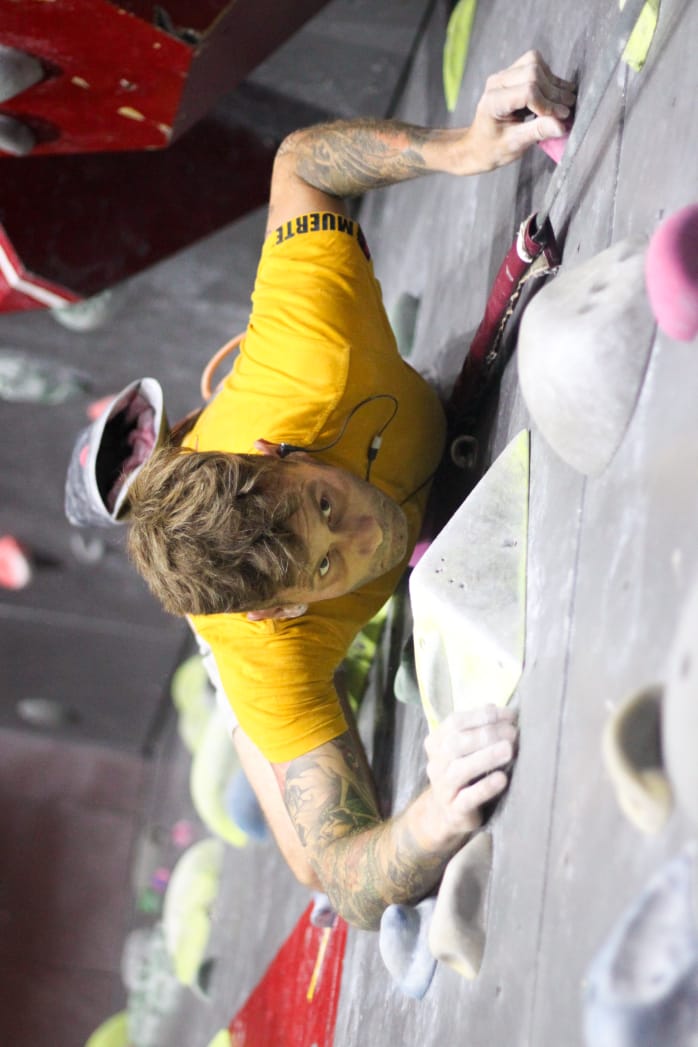

"Ngay sau khi sự cố xảy ra, Fernando nói về vấn đề ACL hoặc meniscus, và chuyên gia về vật lý trị liệu thể thao nói rằng có một vết rách meniscus nhưng không nghiêm trọng, nên cần mất từ sáu đến tám tuần để lành. Tôi được khuyến nghị nghỉ ngơi và không tham gia bất kỳ hoạt động thể thao nào, vì vậy tôi đã nghỉ ngơi và không tham gia bất kỳ hoạt động thể thao nào liên quan đến chân. Tôi tránh sử dụng cầu thang, nhưng tôi vẫn thực hiện các bài tập với tay như hang boarding, tập với vòng dây cao su, pull-up; những hoạt động tương tự, tập trung vào phần cơ thể trên."
Điều thú vị về việc leo núi là đây là một môn thể thao cần vận động toàn bộ cơ thể, nhưng bạn vẫn có thể tập luyện trong quá trình hồi phục.
"Thực tế là leo núi thực sự tốt cho quá trình phục hồi," Fernando xác nhận." Ở nhiều phòng tập lớn trên thế giới, bạn thấy nhiều người đeo băng cố định nhưng vẫn tiếp tục leo núi. Ở Vancouver, chúng tôi có một cô gái đang phục hồi sau phẫu thuật cổ chân với mắt cá chân được buộc băng. Cô ấy không thể chạy hoặc thậm chí đi bộ, nhưng miễn là cô ấy tiếp tục bảo vệ mắt cá chân, cô ấy có thể leo núi."
THUẬT PHÙ THUỶ
Ben được khuyến nghị sử dụng băng đỡ đầu gối để bảo vệ đầu gối trong quá trình hồi phục. Có nhiều tranh luận về việc băng đỡ đầu gối có hiệu quả hay không, nhưng trong khi nhiều người cho rằng băng đỡ đôi khi trở thành "cái gậy" và người ta đánh giá quá cao những lợi ích của nó, có vẻ như việc chọn đúng loại băng đỡ có thể giúp phục hồi đầu gối một cách hiệu quả.
Với JunJun đã đề xuất sử dụng phiên bản băng đơn với dây đeo. Đơn giản là một ít dây buộc và chất liệu neoprene nhưng nó đã có hiệu quả. Thật không ngờ! Tôi đã thử các loại phương pháp cố định khác bao gồm dùng dải X-strap qua hai bên nhưng nó quá hạn chế khi leo núi." X-strap over the side but it was too restrictive for climbing.”
Thật tuyệt vời khi Ben đã trở lại với việc leo núi. Thông thái hơn và mạnh mẽ hơn bao giờ hết.
"Tôi đã đeo băng đỡ trong hai tháng. Đầu gối vẫn còn kêu một chút nhưng không đáng kể - nó kêu như tiếng khớp nhưng không gây vấn đề. Chắc chắn nó không gây vấn đề trong chuyến leo núi gần đây của chúng tôi tới Lào."
Chuyến đi leo núi tới Lào? Thật thú vị khi nghe nói sẽ sớm có thêm những cuộc phiêu lưu tiếp theo.
Trong thời gian chờ đó, nếu bạn muốn giữ đầu gối khỏe mạnh để leo núi, bạn có thể xem các đề xuất từ bạn bè của chúng tôi tại Push Climbing về cách bảo vệ đầu gối khỏi chấn thương.Đó có thể là lưu ý để bạn suy nghĩ khi tập luyện kỹ năng heel hook và cách rời khỏi tường leo bouldering.
Được viết bởi Steve Shipside.

 Tiếng Việt
  English