Top Rope Climbing vs Bouldering
Let’s begin with the definition of the two types of climbing you’ll see most often here at Push. As a beginner, you’ll want to start with Auto-belays and Bouldering.
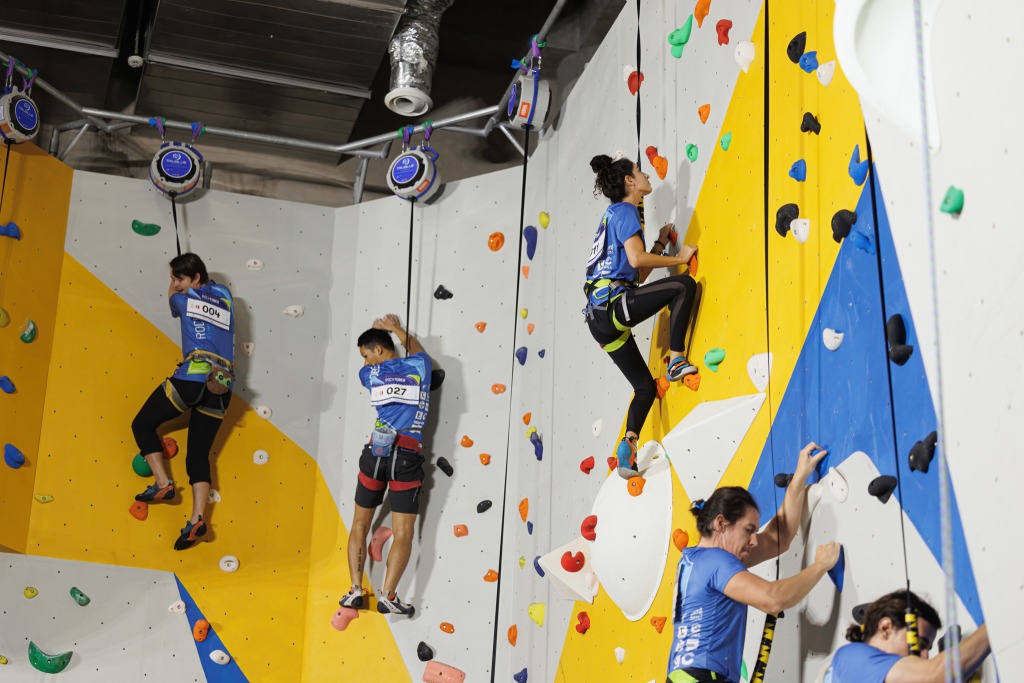
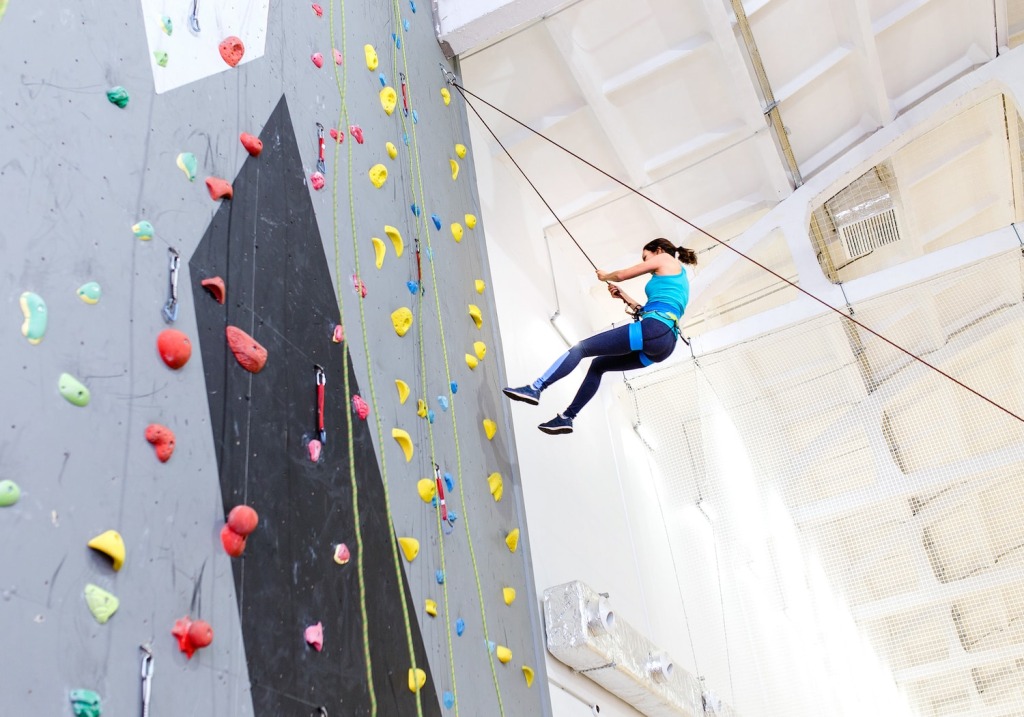
Both types of climbing allow you to show up at the gym to climb without a partner. The difference is that Auto-belays keep you safe when you are climbing up high, and bouldering is a style of climbing that keeps you low to the ground. Check out the pictures below to see the difference.
The word “belay” basically refers to the person holding the rope while the climber climbs. If the climber comes off the wall, the “belayer” will catch the climber to keep them from falling a long distance.
With “auto-belays”, the system works the same, but the belayer is the automatic machine at the top of the wall, which uses friction to automatically lower the climber slowly and safely to the ground no matter where they stop climbing.
If you are standing at the base of any wall in the gym, and you see a machine at the top of the wall, and only one rope hanging with a “carabiner” attached to the end, this is an Auto-belay.
If there are two hanging ropes and you need someone to hold one end while you climb, that’s what we call “top-roping”. You need a partner and a little bit more experience before you’ll be able to do that, but no worries…we have another course just for that!
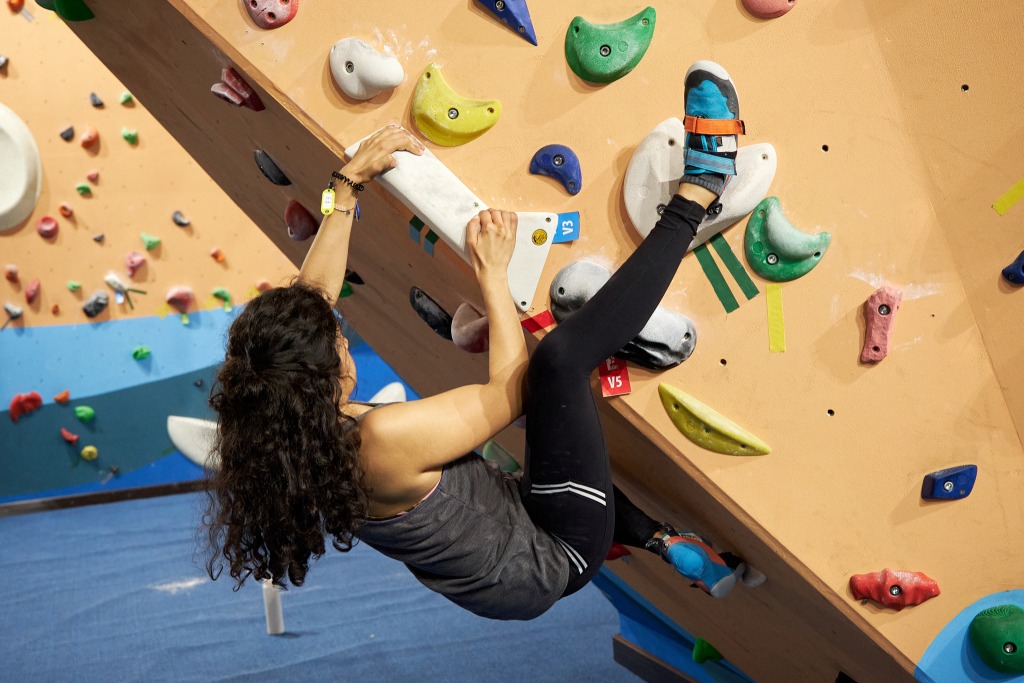
If you see people climbing on the wall without ropes, but closer to the ground, what you are watching is a type of climbing called Bouldering. As a beginner, you can definitely check these routes out, too, but make sure you learn how to fall first, which we cover in the Bouldering & Spotting course.
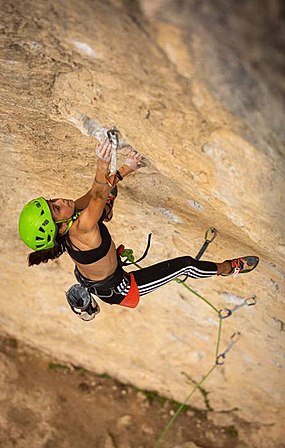
Lead climbing (or leading) is a technique in rock climbing where the lead climber clips their rope to the “quickdraws” attached to anchors on the wall as they ascend a pitch (section) of the climbing route, while their second (or belayer) remains at the base of the route belaying the rope to protect the lead climber in the event that they fall.
 English
  Tiếng Việt